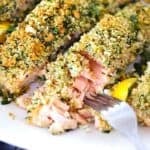
Panko Crusted Salmon with Garlic and Herbs
Salmon is topped with a mixture of panko breadcrumbs, olive oil, herbs, lemon zest, and garlic, then baked for an easy, fuss-free salmon dinner idea. Adding Dijon mustard to the top of the filets before topping adds a pop of flavor and helps the breadcrumb topping stick.
Servings: 4 servings
Calories: 377kcal
Ingredients
- 4 6-oz. salmon filets 1 ½ lbs. total
- 2 tablespoons Dijon mustard
- salt and pepper
- 1 cup panko breadcrumbs
- ¼ cup chopped fresh herbs I used parsley, dill, and chives
- 2 tablespoons extra-virgin olive oil or melted butter, or other oil of choice
- 1 lemon zested, then sliced into wedges for serving
- 1 clove garlic minced
- extra fresh herbs and fresh cracked pepper for serving, optional
Instructions
- Preheat your oven to 425 degrees F. Line a quarter or half sheet pan with aluminum foil.
- Place the 4 6-oz. salmon filets skin side down on top of the foil-covered sheet pan (don't add any oil - just put it right on! See notes for skinless filets). Spread the 2 tablespoons Dijon mustard evenly on top of the salmon (I like to spoon the mustard right on top of each filet and use the back of the spoon to spread it around). Season evenly with salt and pepper (approximately ½ teaspoon salt and ¼ teaspoon pepper).
- In a small bowl, mix together the 1 cup panko breadcrumbs, ¼ cup chopped fresh herbs, 2 tablespoons extra-virgin olive oil, the zest of 1 lemon, the minced 1 clove garlic, as well as some salt and pepper (approximately ½ teaspoon salt and ¼ teaspoon pepper).
- Press panko mixture on top of the salmon filets, using your hands to press it on and make sure it doesn't fall off the top too much. The mustard will help it stick.
- Bake at 425 degrees F for 10-15 minutes, depending on the thickness of the fish, or until the salmon has reached an internal temperature of 125 degrees F. (see notes on temperature and doneness).
- Use a thin spatula to slide between the fish and the skin to transfer the salmon to plates to serve, leaving the skin behind. Serve with lemon wedges and extra fresh herbs and fresh cracked pepper if desired.
Video
Notes
- You can use another fish if you like for this. I often make a similar version of this with haddock or cod, but trout or sea bass or other fish will also work. Bear in mind, cooking time will vary based on the type of fish and thickness of the filet.
- I almost always cook my salmon to an internal temperature of 125 degrees F. This is lower than the FDA recommendation of 145 degrees F, which I always find a bit dry for my taste, similar to how I prefer a medium-rare or medium cooked steak. Please keep in mind, as with all foods not cooked to temperature, there is an increased risk of food-borne illness. Salmon is, notably, one of the least risky fishes out there, specifically farmed salmon, which is why it's often used for sushi, tartar, and other raw presentations, along with tuna.
- If using dried herbs, the general rule of thumb is to use ⅓ of the amount of fresh herbs. For this recipe, 3-4 teaspoons of dried herbs, such as Italian seasoning, would work well.
- Skinless salmon vs. skin-on: The foil method works well here for getting the salmon skin to stick to it, so you can remove the salmon easily to your plate without getting the skin too. I love crispy, seared salmon skin, but baking it always leaves it soggy, which I don't love to eat, so I left it behind. If you really want that skin on your plate, or if you are using skinless salmon filets, feel free to add oil to the bottom of the baking sheet and skip the foil, or use parchment paper instead.
Nutrition
Calories: 377kcal | Carbohydrates: 14g | Protein: 37g | Fat: 19g | Saturated Fat: 3g | Polyunsaturated Fat: 5g | Monounsaturated Fat: 9g | Cholesterol: 94mg | Sodium: 270mg | Potassium: 936mg | Fiber: 2g | Sugar: 2g | Vitamin A: 306IU | Vitamin C: 17mg | Calcium: 67mg | Iron: 3mg